
by Elise Abram
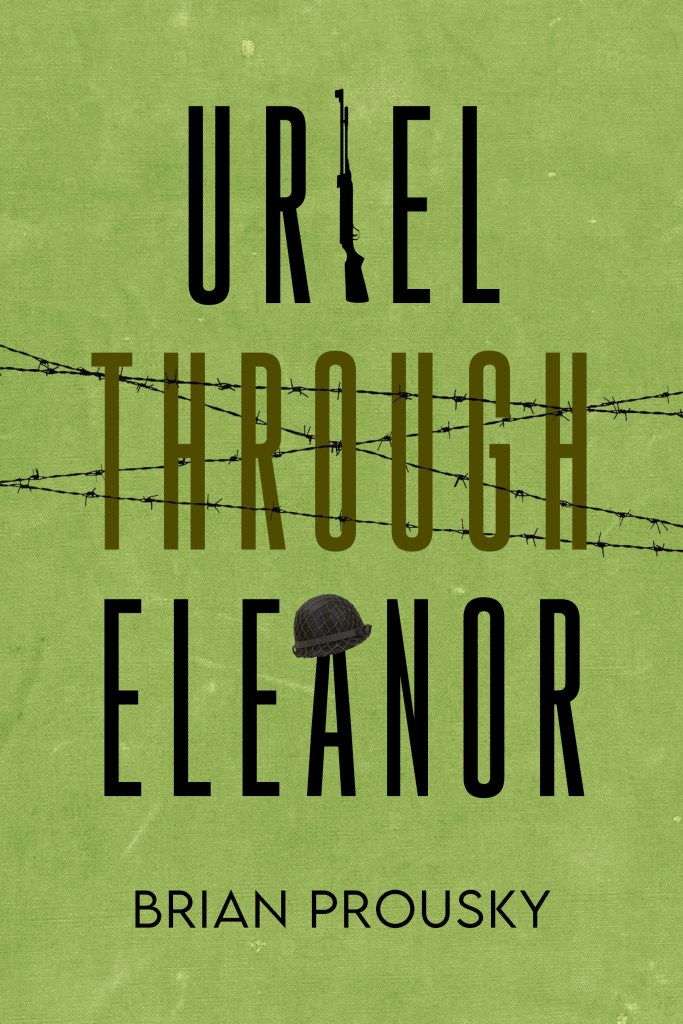
We kicked off the very first WCYR Book Club meeting with a deep dive into Uriel Through Eleanor by Brian Prousky. The conversation was rich with insights, as members shared their thoughts on themes like faulty memory and second-generation trauma caused by the Holocaust.
We started with a quick synopsis of Brian’s novel: while the novel presents itself as Uriel’s memoir, it soon becomes clear that it’s more Eleanor’s story than his. Everything we learn about Uriel is filtered through Eleanor’s perspective, making her the true voice of the narrative. Brian shared that he was inspired by Elias Canetti’s memoir and that he’s drawn to writing about big, often unspoken themes, like life, death, post-traumatic stress, and the horrors of war, including the sexual violence of WWII.
One reader noted, “The book gave us insight into the characters, who felt like real people, and their lives.” This led to a great discussion about Brian’s approach to research. Interestingly, he revealed that 95% of the book came from his imagination—or, as he put it, his nightmares. For Brian, creating a mood and emotional truth is more important than getting every historical detail perfect. He says, “I want every image and every subject to be contiguous with the mood, feeling, sentiments within the book. That is more important than the accuracy of the minutia throughout the novel.” Brian also drew connections between the research he did for this book and some of the themes in some of the other books he has written.
We also explored the character arcs and the diverse cast, and we couldn’t help but admire the poetic quality of Brian’s prose. When asked if poetic writing could be taught, Brian shared his thoughts on his writing process, his favourite parts of the novel, and how he’s more drawn to poetry than prose. Writing Uriel Through Eleanor wasn’t exactly enjoyable for him, but he pushed through to bring these characters to life. He also offered some insight into how he writes believable female characters, explaining how he channels his own best and worst tendencies into his characters and uses observations of real people to shape dialogue and conflict.
A huge thank you to Brian Prousky for joining us and sharing his experiences, and to all the members who attended and made our first meeting such a success!
Next up: Mark your calendars for our next Book Club meeting on Thursday, February 19, 2025, when we’ll discuss Boss by Deborah Armstrong. We can’t wait to explore more great literature together!