and the Importance of Community in Writing

The WCYR’s York Writers’ Conference helped shed light on some questions that most writers agonize over alone: How does one get their work published? What exactly does an agent do, and how do you get your work noticed by one? What are all the steps along the way, and how do you avoid common mistakes if you don’t know what they are?
If you’re anything like me, you may have carried a deep love for stories and a dream of being published since early childhood. My spark moment came when I watched Little Women when I was six, and I was so struck by Winona Ryder’s Jo that I decided I was going to be a writer, too. But I spent most of my life doing it in isolation. The fact that there are entire writing communities out there helping each other out, critiquing each other’s work, and teaching one another about things like publishing and editing was always just a nebulous concept in the back of my brain. Or maybe it’s just that I never had enough faith in my own writing to want to share it.
The conference, Demystifying the Publishing Process, was my very first event within an actual writers’ community. And it’s safe to say that I learned a lot.
The day began with a keynote speech from none other than Boys and Girls Screaming author Kern Carter, who filled us with both inspiration and a healthy respect for how much discipline and hard work is involved in getting your work published. He gave us some sound advice in putting away our egos, emphasizing the importance of really learning the craft to give ourselves the best chance of having our work stand out. Most importantly, his keynote was a good reminder that writing is a passion we must dedicate time and emotional energy to. Carter’s story of spending years learning and fine-tuning his own skills before publishing his first work definitely had the power to light a fire.
Our next presentation was hosted by two facilitators from Firefly Creative Writing, who gently reminded us that we don’t all need to be tortured artists and that writing is, in fact, supposed to be fun. They got our creativity flowing with some light-hearted writing and conversation prompts, which had everyone out of their seats and exchanging ideas.
The Sunshine Girls author Molly Fader and literary agent Marilyn Biderman offered sessions on the process of querying an agent. Molly had a light-hearted, humorous way of explaining the painful process of crafting a query letter. She offered invaluable advice based on her personal experience of making mistakes, taking helpful feedback to heart, and really getting to know her own story in order to craft a successful letter that agents would be interested in. Marilyn Biderman, interviewed by WCYR’s own Natalie Shammas, opened a door into the life of literary agents and discussed what she expects to see (and not see) from a query letter or a manuscript submission. With twenty years of experience, she shared how agents can usher a new author through the publishing process.
Best-selling author Terry Fallis himself offered an engaging Lunch and Learn on the values of knowing your own writing style on the sliding scale from “pantser” to meticulous planner. For some reason, it didn’t occur to me that there was a spectrum, and I learned that I was somewhere more in the middle rather than on the side of pantsing, as I had initially thought. Terry was warm and funny and suggested we owe it to ourselves to try the opposite style of what we normally used, just to ensure we were unlocking our greatest writing potential.
As the day wrapped up, we got the inside scoop on indie publishers from Jen Albert, an acquisitions editor for ECW Press. She gave a detailed presentation on the pros and cons of indie publishing, comparing it against both self-publishing and traditional publishing. She advised us on what to look out for, what to include in a query letter, and where to find lists of Canadian indie publishers. I found it interesting to hear about a third option when the discussion is usually centred around self-publishing vs. traditional publishing with the “Big Five”.
Finally, the conference closed with an informative Q&A panel hosted by authors Kim McDougall, MJ Moores, and Elise Abram, who answered our most burning questions about the writing process. Questions were answered on the pros and cons of pseudonyms, tips about finding an editor, and so much more. I was happy to soak in all the wisdom that comes with the experience of going through the process yourself.
I have to say, for my first experience in a writing community, I was impressed by the conference. It’s amazing how much you can learn in a day about the industry but also about yourself as a writer. It made me want to start writing again after being in a long slump, and I’ve considered finding a writing community in my own area. As something of an academic, Kern Carter’s experience with taking courses and mentorship programs to hone his craft appealed to me as well, giving me some fresh new ideas to consider.
Overall, the act of writing is supposed to be fun and fulfilling. It’s why we all started writing in the first place. Taking part in a community event of like-minded people, like the York Writers’ Conference, was a refreshing way to reignite that spark and remember why I started writing in the first place.
About the Author
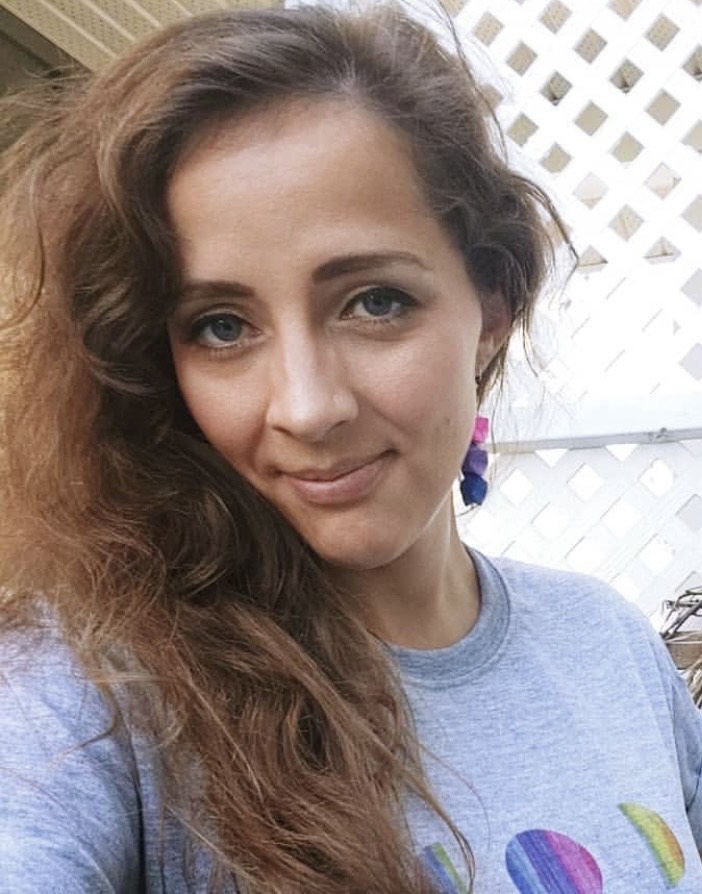
Tasha Longtin is a librarian for work and a writer for life. Her very first finished story was about a horse who meets a unicorn in a forest, written when she was seven or eight. For her, writing has been mostly about escape and entertainment rather than literary prestige, and now she likes to focus on ghosts, pirates, and wild 1980s rock stars who fall in love. When she’s not writing or at work, she’s outside with her Collie/Shepherd mix, Rosa Diaz.